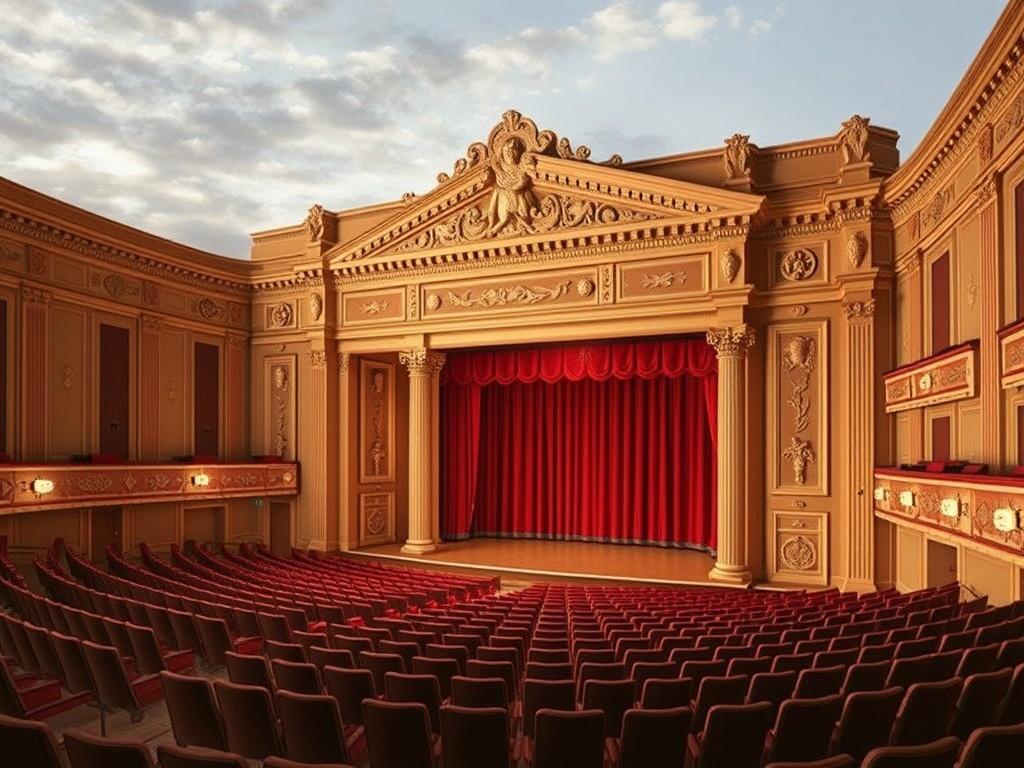
The theatre world is in a period of rapid change. Audiences crave immersive experiences, but they also expect safety, comfort, and accessibility after years of wear and tear on aging venues. Renovation projects aren’t just about cosmetic upgrades; they’re about reimagining how performance lives in built spaces. As engineers, designers, and curators come together, a universal question emerges: what parts of the stage and house will modern theatres update first—and why?
Why theatres need updates now
The case for renovating theatres rests on two pillars: aging infrastructure and evolving audience expectations. Many historic theatres were designed for a pre-digital era, with proscenium arches that constrained perspective, mechanical rigs that required manual handling, and seating configurations optimized for a different kind of evening. Over the decades, the load-bearing shells, electrical systems, and climate controls show their age, even while the cultural demand for live performance remains high. Modern renovations address both safety and experience, turning venues into adaptable ecosystems rather than fixed monuments.
Beyond preservation, updates are a response to a changing arts economy. Remote and hybrid elements—live streams, digital backdrops, and interactive media—demand better bandwidth, more robust projection surfaces, and flexible backstage areas. In regions where municipal budgets prioritize cultural vitality, renovations become a strategic investment, signaling that theatres can compete for audiences by offering comfort, accessibility, and cutting-edge technical capabilities. Реконструкция театров: какие сцены ждут обновления sits at the crossroads of history and innovation, reminding us that a theatre is not just a shell but a living instrument tuned to contemporary needs.
Tech-driven renovations: lighting, acoustics, and stage machinery
Technology is the engine behind most modern upgrades. The leap from incandescent to LED lighting, from dimmer racks to networked lighting consoles, has allowed stages to achieve dynamic effects with lower energy use and less heat. Sound systems have matured toward digital processing, enabling precise control of distribution and level across seating zones. Meanwhile, motorized rigs, automated fly systems, and intelligent stage mechanics let designers realize complex scenography with greater safety and repeatability. All of these changes affect how a performance is perceived and how efficiently a crew can mount a show.
In practical terms, renovations often begin with a survey of what is physically possible in a given building. Architects and engineers map sightlines, rigging points, and load limits to determine how much space can be repurposed for new gear. Then comes the design—how the newest lights, speakers, and automation will coexist with existing structural elements. The goal isn’t merely to install shiny gear; it’s to harmonize technology with the theatre’s acoustics, hydraulics, and human workflows. The result is a stage that looks as alive as it sounds and feels, from the first cue to the final bow.
Lighting and projection: from floods to immersive experiences
Lighting has transformed from a utility to a storytelling instrument. Modern renovations favor LED fixtures that deliver adjustable color temperatures, high CRI, and low heat emission, which protects delicate scenery and reduces air conditioning demands. Lighting grids become digital canvases, with load management that can be reprogrammed for successive productions. Projection surfaces, once a static backcloth, now serve as a dynamic arena for video, augmented reality, and real-time compositing with live performers. The theatre becomes a hybrid stage where physical and digital textures blend seamlessly.
In my experience visiting refurbished venues, I’ve watched light designers push nearly tangible atmospheres through careful layering of color, texture, and movement. A single cue can shift the entire mood of a room—from a warm, intimate glow to a cold, industrial glare—without changing sets. The best upgrades respect architectural lines while expanding color and contrast. The result is a space that invites not just watching but immersion, making audiences feel like they’re part of the story rather than observers at a distance.
Sound and acoustics: balancing intimacy and reach
Acoustics are the invisible backbone of theatre quality. In renovations, designers often blend traditional reverberant rooms with digital processing to achieve clarity without sacrificing warmth. Modern theatres frequently install distributed speaker arrays that deliver even sound pressure across the space, while intelligent equalization adapts to different seat sections. Acoustic treatments—diffusers, absorbers, and baffles—are selected with surgical precision to preserve speech intelligibility while maintaining musicality for orchestra pits and chorus areas.
One practical outcome is the ability to host a wide range of performances—spoken theatre, opera, jazz, and amplified concerts—without a second renovation. The best upgrades give a sense of intimacy from every seat, even in large houses. The audience should hear the percussion’s bite at the back row, the whispered line in the front row, and the orchestra’s bloom as if the performers were speaking directly to them. Achieving that balance is the art of acoustic design as much as it is a science, and it often informs decisions about seating layout, stage volume, and mechanical noise control.
Stage machinery and fly systems: safety and flexibility
Stage machinery has gone from brute force to precision automation. Modern fly systems—rigging towers, counterweight sets, and motorized winches—offer smoother operation, faster changes between scenes, and safer handling of heavy scenery. Updates typically include improved load monitoring, redundancy for essential lines, and centralized control interfaces that prevent miscommunication during a cue. Flexibility becomes a core design parameter, enabling directors to experiment with non-traditional staging without compromising safety or reliability.
Backstage workflows also shift with automation. Robotic aids for set movement, motorized grip tracks for curtain control, and centralized rehearsal tools shorten pre-production timelines and reduce crew fatigue. In turn, this frees up creative teams to focus on artistry rather than the logistics of shifting heavy structures. The backstage becomes a living machine that keeps pace with evolving performance concepts, whether a minimalist drama or a lavish, multimedia spectacle.
Seating, accessibility, and audience experience
Audiences today expect comfort, sightlines, and total accessibility. Seating renovations address legroom, seat width, and turning radii, plus the ergonomics of armrests and cup holders in a living room-like environment. But upgrades go beyond the chair itself. Acoustical design must ensure that every row enjoying a clear line to the stage, regardless of seat location. The balance between intimacy and grandeur hinges on how the house supports speech, song, and silence alike.
Accessibility has moved from a legal checkbox to a design imperative. Renovations often include ramping and elevator access, clearly marked exits, improved hearing assistance systems, and captioning or audio description options for productions. Universal design principles guide seat placement so that families, people with mobility challenges, and first-time theatre-goers feel welcome without feeling singled out. A theatre that cares for its audience in every moment—from admission to exit—builds loyalty that endures beyond a single production.
- Enhanced legroom and seat comfort across the entire auditorium
- Better sightlines with strategic remounting of balconies or reconfiguring seating
- Quiet, unobtrusive climate control to keep patrons comfortable in long performances
- Improved accessibility: ramps, elevators, inclusive seating, and assistive technologies
In personal observations, renovated houses that prioritize audience comfort tend to see higher return attendance and longer intervals between performances. Patrons report that a well-placed seat with a slight, nearly imperceptible adjustment in angle can improve the experience drastically. A thoughtful seating upgrade is a quiet victory—visible enough to be appreciated, but subtle enough not to disrupt the theatre’s character.
Backstage modernization: the invisible gears
Backstage spaces are the engine room of a performing arts venue. Upgrades here focus on workflow efficiency, crew safety, and storage optimization. A well-organized backstage reduces setup times, minimizes clutter, and lowers the risk of accidents. It also supports a broader range of productions. When a theatre can transform a space from a ballet to a contemporary play with minimal friction, it becomes a magnet for diverse programming and a reliable partner for performing companies.
Renovations to backstage areas often include changes to dressing rooms, rehearsals spaces, and workshop areas. Improving ventilation, adding natural light where possible, and upgrading PPE and safety systems contribute to a healthier, more productive work environment. The result is not only safer theatre making but also a more creative pipeline: designers and performers can experiment more freely when the space beneath the stage is organized and dependable.
Backstage layout and rush management
Efficient back-of-house planning reduces the risk of delays that can derail a performance. Modern renovations experiment with logical adjacency: costume shops near loading docks, quick-change bays close to the stage, and grip rooms positioned to minimize transit time during scene transitions. A well-planned rush management strategy means squaring away props, wardrobe changes, and set pieces in seconds rather than minutes. The ultimate benefit is a cleaner, quieter stage that can respond to dynamic cues without clutter or confusion behind the scenes.
Effective backstage design also supports the growing demand for touring productions. A flexible infrastructure—modular dressing rooms, portable rigging kits, and standardized rigging points—lets a theatre host guest companies with minimal adaptation. The fewer the surprises in loading and unloading, the more time the show has to focus on performance quality rather than logistics. In that sense, backstage modernization becomes a key stabilizer for a theatre’s artistic calendar.
Storage and dressing rooms modernization
Storage is the quiet hero of any renovation. Generous wardrobe spaces, climate-controlled prop rooms, and secure equipment lockers prevent damage and theft, while also speeding up daily routines. Dressing rooms with proper lighting, mirrors, seating, and privacy contribute to performer comfort and readiness. These spaces may lack glamour on stage, but they have a huge impact on confidence, preparation, and the quality of each performance.
In practice, many theatres repurpose underutilized corners or adopt modular storage systems that can be reconfigured for different shows. Such flexibility is invaluable for regional theatres that host a rotating slate of plays, musicals, and festivals. When dressing rooms feel like a backstage home, artists bring their best work to the stage, translating that sense of ease into stronger performances for audiences to feel and remember.
Structural resilience and sustainability
Beyond aesthetics and function, theatres must endure. Structural resilience—earthquake, wind, and load-bearing resilience—remains a top priority in many renovation plans. Architects work with engineers to retrofit buildings with selective reinforcements, upgraded connections, and improved damage-control strategies. The aim is not only to protect people but to preserve cultural artifacts that define a city’s identity. Resilience today means a building can withstand climate events and continue to serve communities in the long term.
At the same time, sustainability has shifted from a trend to a baseline expectation. Theatres consume energy daily, and renovations offer a rare opportunity to rethink energy use without diminishing experience. From geothermal or high-efficiency HVAC systems to LED lighting and smart building controls, the path to sustainability often includes energy audits, thermal zoning, and material choices that minimize embodied energy. The combined effect is a quieter, safer, and greener house that can host long-running seasons without compromising the environment or the audience’s comfort.
Seismic retrofitting and resilience
Seismic retrofitting is a common theme in regions prone to earthquakes. Strengthening the structural frame, anchoring critical equipment, and isolating vibrations can dramatically reduce damage risks during tremors. These upgrades are not flashy, but they are essential for preserving performance spaces that carry decades of memories and histories. The work requires careful planning to avoid compromising the theatre’s acoustics and sightlines while adding new supports and damping systems.
In practice, retrofits often combine passive and active safety measures. Passive strategies include reinforcing joints and bracing, while active systems monitor movement and adjust components in real time. This combination gives operators confidence to host productions with large-scale scenery and heavy equipment. It’s a reminder that safety and artistry go hand in hand: without reliable safety, ambitious work cannot exist, and without ambition, safety becomes listless and uninspiring.
Energy efficiency and materials
Materials choices influence both comfort and climate impact. The shift toward sustainable materials—low-emission paints, recycled composites, and responsibly sourced wood—aligns with broader environmental goals. Insulation upgrades, reflective roof coatings, and high-performance glazing reduce energy demands for heating and cooling. In theatres, efficiency isn’t solely about cost savings; it shapes the backstage climate and audience comfort, directly affecting performers’ well-being and audience perception of the space.
On the energy front, modern theatres implement advanced controls: occupancy sensors, demand-controlled ventilation, and weather-responsive systems. These tools ensure that energy is used where and when it’s needed, minimizing waste without compromising air quality. The result is a building that remains welcoming under heat waves or cold snaps, preserving the artistic calendar even when weather fluctuates unpredictably outside.
Preserving heritage while upgrading
Many theatres sit at the intersection of history and modernity. Renovations in historic venues aim to honor original architectural language while enabling contemporary performance demands. That often means restoring decorative elements, preserving iconic proscenium arches, or maintaining the character of timber and brick, even as the interior embraces new technologies. The tension between preservation and modernization can be delicate, yet it is precisely where thoughtful design shines.
One practical outcome is how updates are phased and communicated to the public. Preservation-focused projects frequently schedule interventions during off-peak periods, while ensuring that essential functions—auditorium safety, HVAC, and accessibility—are upgraded first. The best projects tell a story of continuity: the theatre remains familiar to longtime patrons while becoming a platform for tomorrow’s artists. In this sense, Реконструкция театров: какие сцены ждут обновления becomes a narrative of renewal without erasure, a way to keep living culture vibrant without erasing its roots.
Funding, governance, and project management
Renovation initiatives require a blend of public support, private philanthropy, and institutional discipline. Budgets must account for hidden costs—the unpredictability of older structures, supply chain delays, and design iterations as stakeholder expectations evolve. Transparent governance, clear milestones, and rigorous risk management help keep projects on track and on budget. Stakeholders—from city councils to resident companies—must align on a shared vision of what the renovated space will enable for the community.
Community engagement often proves as important as architectural finesse. Open forums, pilot programs, and early access previews build trust and generate feedback that informs the final design. While some costs are visible—new seating, upgraded rigging, better air quality—the true value lies in the enhanced creative potential and the broader accessibility of the space to a wider audience. When funded well, renovations become an instrument for cultural resilience and civic pride, not a luxury project that sits on the shelf after completion.
Case studies and lessons from around the world
Across continents, theatres approach renovation with different constraints and opportunities. A city with a strong industrial heritage might prioritize robust backstage storage and clean-air production corridors, while another with dense urban fabric may focus on acoustic transparency and external noise isolation. What unites these projects is a shared ambition: to extend a theatre’s life, broaden its audience, and empower artists to push boundaries. The details vary, but the underlying logic is consistent—update what matters most for performance and community access, while preserving identity and charm.
From historic houses to contemporary spaces, the lessons are consistent: begin with a clear program of needs, involve the end users early, and design for flexibility. A successful renovation treats technical systems as enablers rather than showpieces. It also embraces sustainability as a core value, ensuring that the theatre remains resilient to climate and economic shifts. When these principles guide the process, the resulting spaces feel both timeless and alive—rooms that honour their past while embracing the future.
| Aspect | Challenge addressed | Typical upgrade | Expected impact |
|---|---|---|---|
| Auditorium acoustics | Unbalanced reflections and dead spots | Acoustic panels, diffusers, and digital signal processing | Sharper speech, richer musical presence, even sound distribution |
| Lighting and projection | Rigid infrastructure, limited color control | LED fixtures, networked control, high-resolution projection surfaces | Dynamic storytelling with energy efficiency |
| Backstage efficiency | Longest pre-show setup times | Modular storage, optimized flow, automated rigging | Faster transitions, safer operations |
| Accessibility | Universal design seating, captioning, assistive tech | Inclusive experiences for broader audiences |
Practical steps for communities considering Реконструкция театров: какие сцены ждут обновления
If a city or region is contemplating a renovation, a practical roadmap can help communities navigate the complexity. Begin with a needs assessment that surveys performers, staff, and audiences. What holds back productions? Where do patrons struggle to access seats or services? A transparent inventory of pain points informs a design brief that prioritizes high-impact changes while preserving essential character. The phrase Реконструкция театров: какие сцены ждут обновления becomes a reminder that the conversation should balance heritage with forward-looking functionality, and that such updates are not merely technical tasks but cultural commitments.
Next comes a phased budget and schedule that respects the theatre’s calendar. The most successful projects phase work around peak performance seasons, while investing in critical infrastructure—HVAC, rigging, and security—early on to avoid safety or reliability issues during shows. Contractor coordination is crucial: a single interface for all trades reduces miscommunication and keeps the project aligned with creative aims. Done well, the planning process makes renovations feel less like disruption and more like an invitation to the community to participate in the space’s evolving story.
A note from the author’s experience
In my years traveling to theatres in different cities, I’ve witnessed how renovations can change a venue’s relationship with its audience. In one mid-sized town, a comprehensive upgrade of the orchestra pit and risers opened a new repertoire approach: more intimate chamber works alongside bold, large-scale productions. The result wasn’t just better acoustics; it was a new kind of collaboration between designers and performers, with audiences sensing a renewed energy in the room. When you modernize thoughtfully, you don’t just improve a building—you expand the theatre’s heartbeat.
A holistic view: what audiences gain beyond the stage
Renovations ripple outward. A renovated theatre becomes a cultural hub that can host workshops, rehearsals, and community events in off-peak hours, building a pipeline of participation that sustains local arts ecosystems. Better climate control and enhanced accessibility expand who can attend performances, and the improved loading and logistics reduce the environmental footprint of touring productions. All these improvements help theatres function more like shared civic spaces than exclusive cultural monuments.
From a creative perspective, a renovated theatre invites experimentation. Directors can stage plays that require unconventional sightlines or flexible staging, knowing the architecture supports the vision. Musicians can exploit refined acoustic spaces to craft textures previously impossible in older rooms. The theatre, in effect, becomes a platform where tradition and experimentation can coexist, inviting both reverence and risk-taking in equal measure.
Closing thoughts: a living, breathing city theatre
Renovation is not a final act but a continuing collaboration among architects, engineers, artists, funders, and audiences. The most successful projects recognize that a theatre is a living instrument—one that thrives when it can adapt to new performance forms, embrace accessible design, and model sustainability for the next generations. The phrase Реконструкция театров: какие сцены ждут обновления signals a forward-looking mindset: change is not a threat to memory but a bridge to future storytelling. As theatres update, they remind us that culture is not static; it grows, reshapes, and invites us to participate in its evolution.
If you’re involved in a renovation discussion, listen first to the people who fill the seats—performers, technicians, teachers, and families. Their daily experiences reveal where design decisions will have the most enduring impact. And if you’re a theatre-goer, keep an eye on the details: the whisper of a new HVAC system, the precise glow of a stage light, the smoothness of a curtain-rise. These are the moments where a renovation translates into a richer, more memorable evening, a space that respects its past while embracing the possibilities of tomorrow.